Sunday, February 2, 2014

TOW #17: "The Naked Face" by Malcolm Gladwell

     Many people do not realize how important it is to be able to read others' body language, much less facial expressions. "The Naked Face" is an essay by Malcolm Gladwell about the research that goes into the Facial Action Coding System, or FACS, and how this research can be applied to real life, whether its through the creation of Pixar movies or through a Q-and-A between a cop and murder suspect. Malcolm Gladwell achieves his purpose of portraying the importance of recognizing certain emotions through facial expressions in "The Naked Face" by using anecdotes and supplying the various pieces of research that went into creating the FACS.
     Malcolm Gladwell is a well-known journalist, author, and speaker. He is best known for his books about various phenomenons and what impact they have on society, such as The Tipping Point and Outliers. "The Naked Face" follows this pattern of social impacts by explaining to readers of The New Yorker and various science enthusiasts the importance of facial expressions. Gladwell includes anecdotes throughout his piece, the most prominent one being about a police officer in L.A., Bob Harms, who happened to be a master at reading facial expressions. He was out with his partner one evening when he spotted a suspicious looking man walking down the side of the road. As the man approached his car, Harms asked the man what he was doing. "I was out for a walk," the man replies. "I have something to show you." Harms then shot the man through an open window. His partner was astonished and asked him why he did it. Harms replied that he knew the man's motives were not good. It was later known that the man had actually been very unstable and he had taken a walk after his failed suicide attempt, carrying a makeshift flamethrower, and he was planning on setting fire to the very car Harms and his partner were sitting in. Gladwell effectively employs this device because it shows how being able to read peoples' faces can be used practically and that it can even save lives.
     Gladwell also includes information about the research that went into the FACS. He mentions that the created of the FACS, Paul Ekman, conducted his research by finding the answer of one of his main curiosities: are these facial expressions universal? He then traveled to countries all over the world, including Japan, Brazil, Argentina, and countries with very remote villages such as Paupa New Guinea. It was found that when the locals everywhere were shown pictures of people with various facial expressions, they understood the emotions and feelings that were associated with the facial expressions. This helps Gladwell achieve his purpose because it emphasizes how facial expressions are recognized globally and thus can be used anywhere.

A chart from the FACS
Read "The Naked Face" here

Monday, January 20, 2014

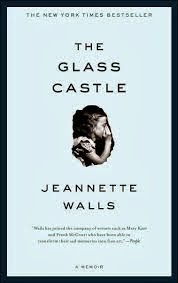
TOW #16: "The Glass Castle: by Jeannette Walls (Part 2)

     The second half of the memoir The Glass Castle by Jeannette Walls consists of her life as a young adult and is filled with themes and ideas pertaining to growth and the loss of innocence. Once the Walls pack up their ruined life in Phoenix, they plan to move to Jeannette's father's hometown of Welch, West Virginia. There, Jeannette and her siblings, Lori, Brian, and Maureen, meet their paternal grandparents, Erma and Grandpa, and their Uncle Stanley. The Walls are forced to live in the basement of Erma's and Grandpa's house, where they can stay safe from Erma's cold personality. There, Jeannette learns many lessons about racial discrimination, family life, and why her father is the way he is. At the end of the book, Lori discovers what it is like to be a normal kid and decides to move to New York City. She is then followed by Jeannette, Brian, and Maureen. Walls wrote The Glass Castle for those who had normal childhoods so she could share the story of her eccentric childhood. In the last section of her novel, Jeannette Walls uses juxtaposition to achieve her purpose of conveying the themes of hypocrisy and selfishness in her mother's and father's parenting.
     Throughout the novel, Walls characterizes her father as an erratic and aggressive alcoholic and her mother as an aloof, irresponsible bystander. In fact, in one section of the book, Walls wrote about how her father once came home in the middle of the night and asked her to stitch up his arm, regardless of her obvious disgust and reluctance. Walls also wrote about how she and Brian once found a diamond ring, but rather than selling the ring to pay for food and other necessities, their mother wanted to keep it to "boost her self-esteem." Walls later contrasts these moments of selfishness with her and her siblings' hard work and determination in their work. As adults, Jeannette, Lori, and Brian made so many sacrifices in order to do what was right for them and their loved ones. With this use of juxtaposition, Walls effectively achieves her purpose of conveying the themes of hypocrisy and selfishness throughout her childhood.


Saturday, January 11, 2014

TOW #15: The Golden Globes Promo (Visual Text)

      Tomorrow night, the red carpet in Hollywood will be filled with various television and movie stars who come together to celebrate their successes in acting, writing, and directing. The 71st annual Golden Globe awards will be held at 7pm ET/4 pm PT on NBC and will be hosted by actresses Tina Fey and Amy Poehler for the second year in a row. An assortment of promos have been aired on the Internet and on TV for several months. These promos show Fey and Poehler goofing around together and having a good time. The comedic affect of these promos really appeal to TV-watching audiences, because who wants to watch an award show hosted by dull, boring characters? Particular promos (posted below) depict Fey and Poehler in a very formal setting, which contrasts with the somewhat unserious nature of the two. The Golden Globes were created by the American Foreign Press Association in order to recognize achievements in television and film, and these entertaining promos were created to pull audiences into watching the program.
     These promos are effective in achieving the American Foreign Press Association's purpose because they take the name of a very well-known, glamorous award show and make everything seem so much less elite and elaborate; the use of humor reaches out to audiences and makes them feel like they are a part of the celebration. Tina Fey and Amy Poehler are definitely the right people to be hosting the Globes because they are very well-known comedy actresses (who, I might add, both star/starred on two of my favorite TV shows) who add a more welcoming feel to the otherwise seemingly exclusive award ceremony. Promos portraying Fey and Poehler also reach specific target audiences of comedy-lovers and women. If someone hears that the actress from his or her favorite TV show is hosting an award show, they are more likely to tune in, even if they don't really care about the actual awards. Women are also a target audience; they are also more likely to watch the show because it is being hosted by two successful, hard-working women who serve as role-models for girls everywhere.

The Biggest Hollywood Party of the Year
Watch the Golden Globes tomorrow night, January 12, at 7pm ET/4pm PT on NBC!

Sunday, January 5, 2014

TOW #14: Subaru Car Advertisement (Visual Text)

     Car commercials are one of the most popular kinds of advertisements found on the TV, internet, and in magazines. While some of these commercials appeal to audiences through the use of "cool" images—the car racing down curvy mountainside roads, being driven by tough, masculine men, or sometimes even flying through the air, they are missing one important factor in a person's decision to buy a car: the car's overall worth. The car company Subaru effectively achieves the purpose of demonstrating why people should buy its car in its commercial through its use of facts and juxtaposition.
     This advertisement is found on many car dealership websites, so its audience is made up of people who are looking for cars to buy. Subaru takes advantage of this by first of all stating, "Well done to Audi and BMW for winning the beauty contest. From the winner of the 2006 International Engine of the Year." This ad juxtaposes luxurious car companies like Audi and BMW to the more casual Subaru—beauty versus brawn. Juxtaposition effectively helps Subaru in its pursuit of finding more consumers because it reminds those consumers that value is more important than looks and it guarantees them that they will get more bang for their buck. This ad additionally employs the fact that Subaru won the title of the 2006 International Engine of the Year, which appeals to both the audience's ethos and logos. It establishes credibility because the company was awarded this title by car professionals who know what they are talking about, and it once again stresses the importance of a good engine over the importance of how the car looks. Subaru overall effectively achieved its purpose of demonstrating why people should buy its car by evaluating the importance of how well the car runs as opposed to what the car looks like and by stating that it won the title of the 2006 International Engine of the Year.


Sunday, December 15, 2013

TOW #13: "I Have a Dream" by Martin Luther King, Jr.

     "I Have a Dream" by Martin Luther King, Jr. is undoubtedly one of the most important speeches in American history. King delivered this speech at the Lincoln Memorial in Washington, D.C. in the prime of the Civil Rights Movement in order to encourage his audience—every single American—to take a stand against the injustice against colored people. King is a well-known American Civil Rights activist, clergyman, and humanitarian. He effectively achieves his purpose with his use of powerful imagery and allusions.
     King's powerful imagery helps him achieve his purpose because with the imagery comes a sense of disappointment toward American society which underscores how American values really had not come a long way since Abraham Lincoln's signing of the Emancipation Proclamation. Touching on this issue, King states, "One hundred years later, the life of the negro is sadly crippled by the manacles of segregation and the chains of discrimination. One hundred years later, the negro lives on the lonely island of poverty in the vast ocean of material prosperity" (para. 3). These images portray segregation as manacles and discrimination as chains, further identifying colored people as restricted and powerless against the injustice that conquers them. He additionally describes poverty as an island in an ocean of material prosperity, signaling that there is no way out.
    King alludes to not only historical events but also American patriotic songs. Toward the end of his speech, he emphasizes the irony in the popular song "My Country 'Tis of Thee" by stating that the lyrics cannot really be true until African Americans are "set free." He then brings up the idea of America as one whole united country when he continues the song. He says that freedom should ring from the "prodigious hilltops of New Hampshire" and the "mighty mountains of New York" and the "heightening Alleghenies of Pennsylvania" but also the "Stone Mountain of Georgia" and the "Lookout Mountain of Tennessee" and from "every hill and molehill of Mississippi."

I Have a Dream
(Picture and speech source: http://www.americanrhetoric.com/speeches/mlkihaveadream.htm)

Monday, December 9, 2013

TOW #12: "The Glass Castle" by Jeannette Walls (Part 1)

     The first half of The Glass Castle consists primarily of Jeannette Walls's travels through the southwestern United States as a child and how it shaped her view on childhood. Growing up without a secure home, Walls found herself in a new town almost every week, which is what makes up the bulk of the book. Through the stories of her journey, Walls appeals to her audience made up of people who grew up with an ordinary childhood and achieves her purpose of effectively illustrating her thoughts as a child growing up with her unstable family in her memoir with the help of vivid imagery.
     Walls begins her memoir with a story about how when she was three years-old, she was once left unattended at the stove when making hot dogs. This detail would appall her readers, since many of them are not used to the idea of a very young girl cooking hot dogs alone. She continued her story by adding that her dress caught on fire and she ended up in the hospital with severe burns. After such a traumatic event, one might believe that the child would grow up to have a fear with fire. This was different in Walls's case: she became fascinated with it. She ponders this fascination when she writes, "I loved the scratching sound of the match against the sandpapery brown strip when I struck it, and the way the flame leaped out of the red-coated tip with a pop and a hiss. I'd feel its heat near my fingertips, then held my breath until the moment when they seemed about to blaze up out of control" (15). Through this use of imagery, Walls effectively conjures up the feelings of excitement and curiosity she felt as a child when playing with fire, therefore achieving her purpose of portraying her thoughts as a child with an unusual home life.
     Walls is credible because The Glass Castle is the story about her own life. Her aforementioned use of imagery also strengthens her credibility because it aids her in depicting the thoughts and ideas that she had as a child. Jeanette Walls achieves her purpose of characterizing herself as a child and therefore describing for her audience an unusual childhood in The Glass Castle with her use of stirring imagery.


Tuesday, December 3, 2013

TOW #11: "The Scream" by Edvard Munch (Visual Text)

     Norwegian artist Edvard Munch's The Scream is likely one of the most iconic pieces of art in history. With its striking color scheme and macabre depictions, The Scream immediately stood out from the rest of the impressionist works completed in the late 19th century. When Munch was asked to describe the setting of his work he replied, "I was walking down the road with two friends when the sun set; suddenly the sky turned as red as blood. I stopped and leaned against the fence, feeling unspeakably tired. Tongues of fire and blood stretched over the bluish black fjord. My friends went on walking, while I lagged behind, shivering with fear. Then I heard the enormous infinite scream of nature." This makes it clear that Munch's purpose in creating this painting was to not only depict the remarkable sunset he saw that night but to also depict his inner feelings of paranoia, anxiety, and anger.
     Like most other artists, Munch personally struggled with feelings of mental illness; his own sister was in the hospital for instability during the time period of the painting. Some art historians have even noticed the mental hospital included behind the painting's subject, a genderless person staring straight and screaming the "infinite scream of nature" Munch had mentioned hearing. Since it is not clear whether the subject is a man or a woman, historians have concluded that it is actually a portrait of both Munch and his sister.
     Munch's color scheme and imagery completely help his in achieving his purpose. The crimson and scarlet streaks in the sky give the viewer a sense of panic and disorder; Munch's description of "tongues of fire and blood" further gives his audience a sense of violence. His subject's facial expression brings about the feelings of fear and confusion Munch and his sister had suffered with. Since Munch was actually a very popular artist at the time, he created his work knowing that it would be seen by the public. Because of its initially puzzling representation and ominous meaning, The Scream remains to be one of the most enigmatic pieces of artwork to this day.

Fun fact: Two different versions of The Scream have been stolen before by art thefts: one painted version was stolen from the National Gallery, Oslo in 1994, and another painted version was stolen in 2004 from the Munch Museum along with painting Madonna