Sunday, December 15, 2013

TOW #13: "I Have a Dream" by Martin Luther King, Jr.

     "I Have a Dream" by Martin Luther King, Jr. is undoubtedly one of the most important speeches in American history. King delivered this speech at the Lincoln Memorial in Washington, D.C. in the prime of the Civil Rights Movement in order to encourage his audience—every single American—to take a stand against the injustice against colored people. King is a well-known American Civil Rights activist, clergyman, and humanitarian. He effectively achieves his purpose with his use of powerful imagery and allusions.
     King's powerful imagery helps him achieve his purpose because with the imagery comes a sense of disappointment toward American society which underscores how American values really had not come a long way since Abraham Lincoln's signing of the Emancipation Proclamation. Touching on this issue, King states, "One hundred years later, the life of the negro is sadly crippled by the manacles of segregation and the chains of discrimination. One hundred years later, the negro lives on the lonely island of poverty in the vast ocean of material prosperity" (para. 3). These images portray segregation as manacles and discrimination as chains, further identifying colored people as restricted and powerless against the injustice that conquers them. He additionally describes poverty as an island in an ocean of material prosperity, signaling that there is no way out.
    King alludes to not only historical events but also American patriotic songs. Toward the end of his speech, he emphasizes the irony in the popular song "My Country 'Tis of Thee" by stating that the lyrics cannot really be true until African Americans are "set free." He then brings up the idea of America as one whole united country when he continues the song. He says that freedom should ring from the "prodigious hilltops of New Hampshire" and the "mighty mountains of New York" and the "heightening Alleghenies of Pennsylvania" but also the "Stone Mountain of Georgia" and the "Lookout Mountain of Tennessee" and from "every hill and molehill of Mississippi."

I Have a Dream
(Picture and speech source: http://www.americanrhetoric.com/speeches/mlkihaveadream.htm)

Monday, December 9, 2013

TOW #12: "The Glass Castle" by Jeannette Walls (Part 1)

     The first half of The Glass Castle consists primarily of Jeannette Walls's travels through the southwestern United States as a child and how it shaped her view on childhood. Growing up without a secure home, Walls found herself in a new town almost every week, which is what makes up the bulk of the book. Through the stories of her journey, Walls appeals to her audience made up of people who grew up with an ordinary childhood and achieves her purpose of effectively illustrating her thoughts as a child growing up with her unstable family in her memoir with the help of vivid imagery.
     Walls begins her memoir with a story about how when she was three years-old, she was once left unattended at the stove when making hot dogs. This detail would appall her readers, since many of them are not used to the idea of a very young girl cooking hot dogs alone. She continued her story by adding that her dress caught on fire and she ended up in the hospital with severe burns. After such a traumatic event, one might believe that the child would grow up to have a fear with fire. This was different in Walls's case: she became fascinated with it. She ponders this fascination when she writes, "I loved the scratching sound of the match against the sandpapery brown strip when I struck it, and the way the flame leaped out of the red-coated tip with a pop and a hiss. I'd feel its heat near my fingertips, then held my breath until the moment when they seemed about to blaze up out of control" (15). Through this use of imagery, Walls effectively conjures up the feelings of excitement and curiosity she felt as a child when playing with fire, therefore achieving her purpose of portraying her thoughts as a child with an unusual home life.
     Walls is credible because The Glass Castle is the story about her own life. Her aforementioned use of imagery also strengthens her credibility because it aids her in depicting the thoughts and ideas that she had as a child. Jeanette Walls achieves her purpose of characterizing herself as a child and therefore describing for her audience an unusual childhood in The Glass Castle with her use of stirring imagery.


Tuesday, December 3, 2013

TOW #11: "The Scream" by Edvard Munch (Visual Text)

     Norwegian artist Edvard Munch's The Scream is likely one of the most iconic pieces of art in history. With its striking color scheme and macabre depictions, The Scream immediately stood out from the rest of the impressionist works completed in the late 19th century. When Munch was asked to describe the setting of his work he replied, "I was walking down the road with two friends when the sun set; suddenly the sky turned as red as blood. I stopped and leaned against the fence, feeling unspeakably tired. Tongues of fire and blood stretched over the bluish black fjord. My friends went on walking, while I lagged behind, shivering with fear. Then I heard the enormous infinite scream of nature." This makes it clear that Munch's purpose in creating this painting was to not only depict the remarkable sunset he saw that night but to also depict his inner feelings of paranoia, anxiety, and anger.
     Like most other artists, Munch personally struggled with feelings of mental illness; his own sister was in the hospital for instability during the time period of the painting. Some art historians have even noticed the mental hospital included behind the painting's subject, a genderless person staring straight and screaming the "infinite scream of nature" Munch had mentioned hearing. Since it is not clear whether the subject is a man or a woman, historians have concluded that it is actually a portrait of both Munch and his sister.
     Munch's color scheme and imagery completely help his in achieving his purpose. The crimson and scarlet streaks in the sky give the viewer a sense of panic and disorder; Munch's description of "tongues of fire and blood" further gives his audience a sense of violence. His subject's facial expression brings about the feelings of fear and confusion Munch and his sister had suffered with. Since Munch was actually a very popular artist at the time, he created his work knowing that it would be seen by the public. Because of its initially puzzling representation and ominous meaning, The Scream remains to be one of the most enigmatic pieces of artwork to this day.

Fun fact: Two different versions of The Scream have been stolen before by art thefts: one painted version was stolen from the National Gallery, Oslo in 1994, and another painted version was stolen in 2004 from the Munch Museum along with painting Madonna

Sunday, November 24, 2013

TOW #10: "Vanishing: The Anxiety of Geography & Genetics" by Leslie Tucker

     Leslie Tucker ponders the structure of modern family life in her essay "Vanishing: The Anxiety of Geography & Genetics." Published on Hippocampus Magazine, an online creative non-fiction magazine, this essay is meant for aspiring creative non-fiction writers. Tucker begins her essay with the memories about Mother's Day in 1976. Three generations of her family celebrated that holiday together: her parents, her children, and she and her husband "sat outdoors around the dinner table and focused on each other's faces" (para. 41). Tucker also emphasizes the lack of technological distractions at that time, describing that Mother's Day as "A time when none of us clutched small devices to distract us from the momentary present, a time when we sat still and paid attention to what was said at the table, even if we were bored" (para. 41). Throughout the essay, Tucker also adds that thee introduction of technology not only removes the intimacy around the dinner table, but also the intimacy around general family relationships. She includes her own example of how her daughters live across the country from her and because of this distance, she feels that she cannot connect with her grandchildren. Although Tucker owns more digital pictures of her grandchildren than her father ever owned of her own children, she felt that it was not the same because "he witnessed the events portrayed in his photos, lived them in real time" (para. 18).
     Tucker, who has been published in many works, including The Baltimore Review and Shenandoah Magazine, effectively accomplishes her purpose of demonstrating the importance of close family life. She accomplishes this purpose through her use of personal anecdotes and imagery. In this essay, she includes stories about her grandson, Gus, and how she feels that she cannot ever get to know him fully because she lives so far away from him. Tucker's vivid imagery describes her setting, and how benign she once felt around her whole family. This benevolent image fully juxtaposes with the emptiness she feels as an adult, far away from her family. In her essay about the difference between old and modern family relationships, Leslie Tucker achieves her purpose of illustrating the importance of family life through her use of personal anecdotes and imagery.

Sunday, November 17, 2013

TOW #9: "A Haitian Boy's Needless Death From Diabetes" by Palav Babaria and Aisling O'Riordan

     Last spring, on a stormy, rainy night, twelve year-old Jean Paul was rushed to an emergency room in rural Haiti because of his horrible medical condition. Jean Paul suffered from type 1 diabetes and malnutrition, which eventually led up to diabetes ketoacidosis, which is a diabetic complication where the body cannot use glucose as a fuel source because there is not enough insulin and instead uses fat as energy. In America, this problem could be easily solved with the availability of glucose strips. However, in rural Haiti, Jean Paul's family lacked those resources and only rushed him to the hospital when it was too late. Even the little amount amount of glucose strips the hospital had did not help them; its only glucometer did not match those strips. Palav Babaria and Aisling O'Riordan, the two authors of the op-ed article, are doctors who volunteered at the hospital at which Jean Paul was admitted. They experienced his tragic story first-hand, using words like "sticklike" to describe his wrists (para. 3), and portraying his condition through phrases like "ragged breath" and "racing heart" (para. 9).
     Published on November 14, also known as "World Diabetes Day," this article's main purpose is to bring attention to a huge medical issue—the lack of globally acceptable glucose strips. Most glucose strips are only compatible with a certain glucometer, which was a huge issue in Jean Paul's case because the hospital staff only had ten available strips and were unable to properly ration out the use of those strips. The article was meant for an audience made up of those who are familiar with global medical issues. In addition, since it is specific to the illness of diabetes, it greatly affects those who are or have loved ones that are diagnosed with diabetes. Babaria and O'Riordan are effective in achieving their purpose because they choose Jean Paul, a twelve year old malnourished child from Haiti,  as a subject. If the subject was a grown man from a developed nation like America, the article's audience would be less affected by the message. The authors' aforementioned use of diction plays a big role as well because it emphasizes Jean Paul's horrible state. Lastly, the authors' contemplative and somewhat resentful tone illustrate the absurdity of the issue and how it can easily be solved with the creation of globally compatible glucose strips, closing their article with the sentence, "...we watched as nurses disconnected Jean-Paul from the intravenous tubing that night and carefully pulled a sheet over him so his father could carry his body out of the hospital" (para. 15).

An estimated 300,000 people are affected by diabetes in Haiti. Learn more about the disease's affect on the developing country here: http://www.crudem.org/diabetes-in-haiti/
(Picture source: http://www.wired.com/magazine/2010/04/ff_haiti/)

Saturday, November 16, 2013

IRB Post MP2

     When Jeanette Walls was a child, she traveled over the whole United States to find a place to build the Glass Castle. In this book, titled "The Glass Castle," Walls's parents, Rex and Rose Mary, and her siblings, Brian, Lori, and newborn Lily, all move throughout the nation in various types of cars. Once they find somewhere to live, they only stay there for a few days, only to wake up one morning to get on the road again. She writes a lot about her father, who's big dream is to strike it rich and find gold in the deserts of the mid-west. Walls's father's ambitions shaped much of her childhood, as he was always the person to talk about finding gold and becoming rich. One page 28, she writes "...we had to find gold... so we could build the Glass Castle."
     Jeanette Walls wrote this book to share her story of her difficult childhood with others. Although her parents never to stopped and actually raised their kids, Walls constantly lets her audience know that they really loved her and her siblings. I chose this book for my IRB because I have heard so much about it and how good it is. I also decided that I should read a memoir because I wanted to read a wide variety of non-fiction sub-genres. Through reading this book, I hope to gain knowledge of how memoirs are written and the strategies Walls uses to achieve her purpose.

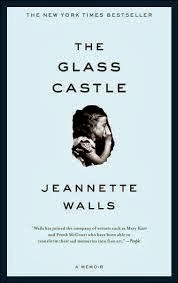
The Glass Castle

Tuesday, November 5, 2013

TOW #8: "Dreamland" by David K. Randall (Part 2)

     David K. Randall continues the second half of his book Dreamland by underlining the importance of sleep. His audience, made up of science enthusiasts, can better understand why getting a good nights' sleep is so significant through Randall's frequent use of examples and anecdotes. For example, he starts out his chapter "Sleep on It" by writing about golf legend Jack Nicklaus. Nicklaus had always been an excellent golfer, but at the 1964 U.S. Open, he found himself in a bit of a rut; he found himself tied for twenty-third place. He then spent the next nights wondering how he messed up his swing. One night, however, he dreamt about golfing, and awoke with a major improvement in his technique. Randall relates this story to the brain's ability to solve problems and issues when one is sleeping and includes various other famous examples: Paul McCartney dreaming the melody of the popular song "Yesterday," Samuel Taylor Coleridge's inspiration for his poem "Kubla Khan," and even Stephanie Meyer's idea for her book Twilight. These examples establish a sense of common interest between the reader and the author, so the reader is better able to understand what a good nights' sleep can do for some people.
     Randall, a professor at New York University, a journalist for publications such as the New York Times, New York Magazine, and Forbes, and a novel sleep scientist, effectively demonstrates his purpose through his establishment of credibility and his use of examples and research conducted by professionals. He establishes credibility for the topic of sleep right off the bat with his story about his encounter with sleepwalking. This story immediately connects with his audience and puts him on the same level as them. His use of examples supports his central argument that sleep is essential for not only a person's physical well-being but also their mental and emotional well-being. Dreamland is an insightful and informative book about the mysterious scientific field of sleep.